Rowan’s had been there for years when locals started calling it “that new bakery”.
The small family bakery sat on a quiet Midlands street behind the high street. Some customers knew it and liked it. Plenty of people nearby, apparently, did not know it existed.
This is quite a peculiar problem for a physical shop. The missing ingredient is simply being noticed.
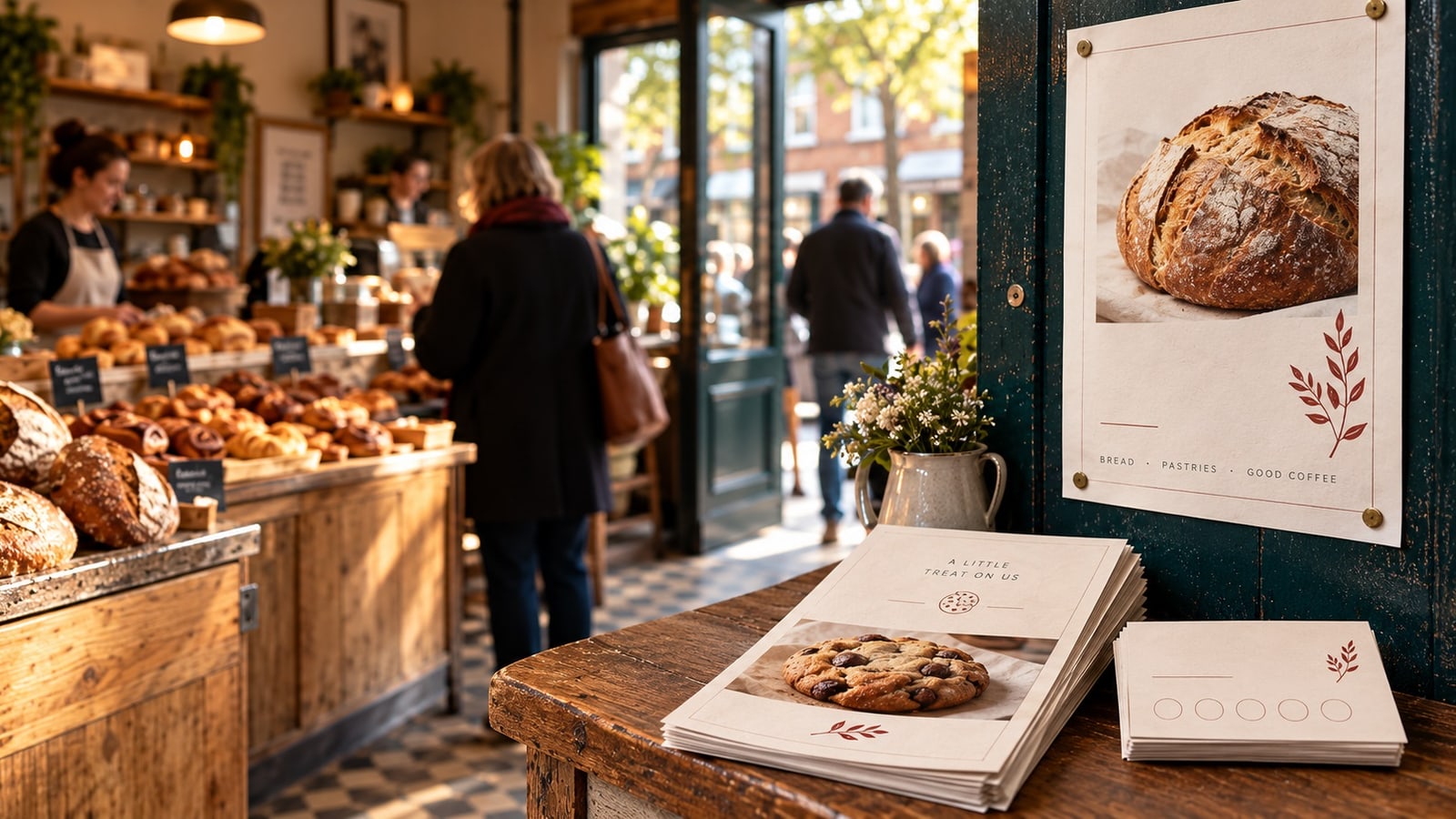
Rowan’s tried to fix that with three decidedly ordinary objects.
There were leaflets offering a free cookie with any purchase. Posters appeared where local people already gathered, including cafés, gyms, the library and the post office. Customers also received branded loyalty cards — something small enough to remain in a purse or wallet rather than vanish down a social media feed.
None of this was especially futuristic. There was no elaborate digital experience or attempt to make buying a loaf feel like joining a movement. The bakery put reminders of itself into the neighbourhood and gave people a modest reason to walk through the door.
According to the provider account behind the campaign, visits increased and Saturday mornings became busy enough for Rowan’s to start opening earlier. The results are reported rather than independently verified, but the human detail is the interesting part: locals began speaking about an established business as though it had just arrived.
A business can be deeply familiar to the people running it and still be almost invisible beyond its front window. According to the account, Rowan’s became newly discoverable without changing its address.